




Bitcoin diverges from stocks in May 2026 as ETF outflows and shrinking active addresses expose a liquidity crisis, not a market correlation.
Stocks have been climbing since May 2026. Bitcoin hasn’t followed. The S&P 500 and Japanese equities trade near highs while BTC struggles to hold ground.
Both assets carry the “risk asset” label. The divergence is getting harder to explain away.
Two Markets, Two Different Engines
The stock rally isn’t broad. It’s concentrated. Mega-cap AI names like NVIDIA drive most index gains, supported by capital spending cycles, share buybacks, and ETF inflows into equity products. Investors can see future profit growth.
Bitcoin runs on a different fuel entirely. There are no earnings, no cash flow, no quarterly numbers to anchor a thesis. BTC price depends on new liquidity arriving and fresh participants entering the market.
Per CryptoQuant’s Quicktake analysis, both of those conditions are weakening right now.
The Participation Problem No One Wants to Say Out Loud
Spot BTC ETFs recorded large outflows through the second half of May. Capital that arrived through regulated vehicles is now leaving through the same door.
On-chain data tells a rougher story. BTC active addresses dropped 39.80% over a two-week period, falling from 821,000 to just 494,000 as of May 26. Transaction activity is slowing. Network participation is fading.
CryptoQuant data shows active addresses trending lower since 2024, even as the S&P 500 keeps printing highs. The price stayed elevated. The network did not keep up.
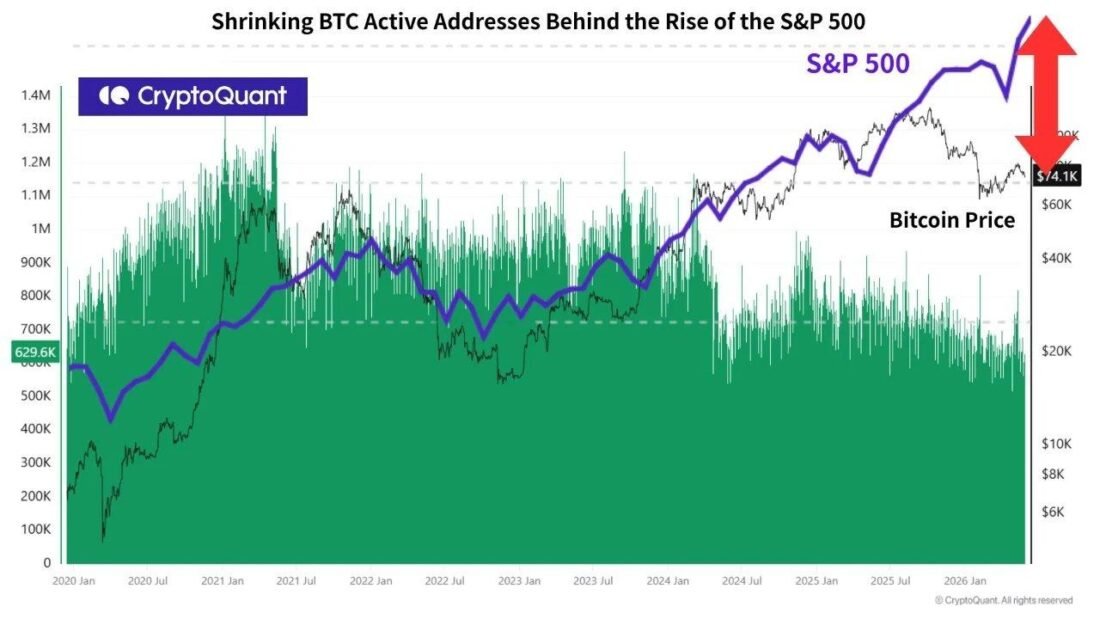
Source: CryptoQuant
Where the Money Is Actually Going
Capital is rotating toward what CryptoQuant calls “profit-growth assets.” Equities qualify. Bitcoin, right now, does not.
The deeper problem shows up in DeFi. WBTC active addresses hit a 2026 low in May, sitting at a 7-day moving average of just 2,134 as of May 21. The pipeline that moves Bitcoin liquidity into Ethereum’s lending and collateral markets has gone quiet.
In past bull cycles, rising prices came with growing user activity. Those two things moved together. Today, prices remain elevated while the underlying participation fades.
What BTC Actually Needs to Turn This Around
Stock market strength alone will not be enough for Bitcoin. The CryptoQuant analysis is direct on this point.
For a real recovery, BTC needs stronger ETF inflows, rising on-chain activity, an improving Coinbase Premium, and a weaker dollar environment. None of those conditions are present in a meaningful way right now.
The real question ahead is not whether stocks stay strong. It’s whether new demand returns to Bitcoin itself.
Digital Currency Market Dynamics:#Stocks #Climb #Bitcoin #Doesnt #Heres #OnChain #Data #Shows
